Networking tips from presenter Matthew Davies

Girls in tech event January 2014

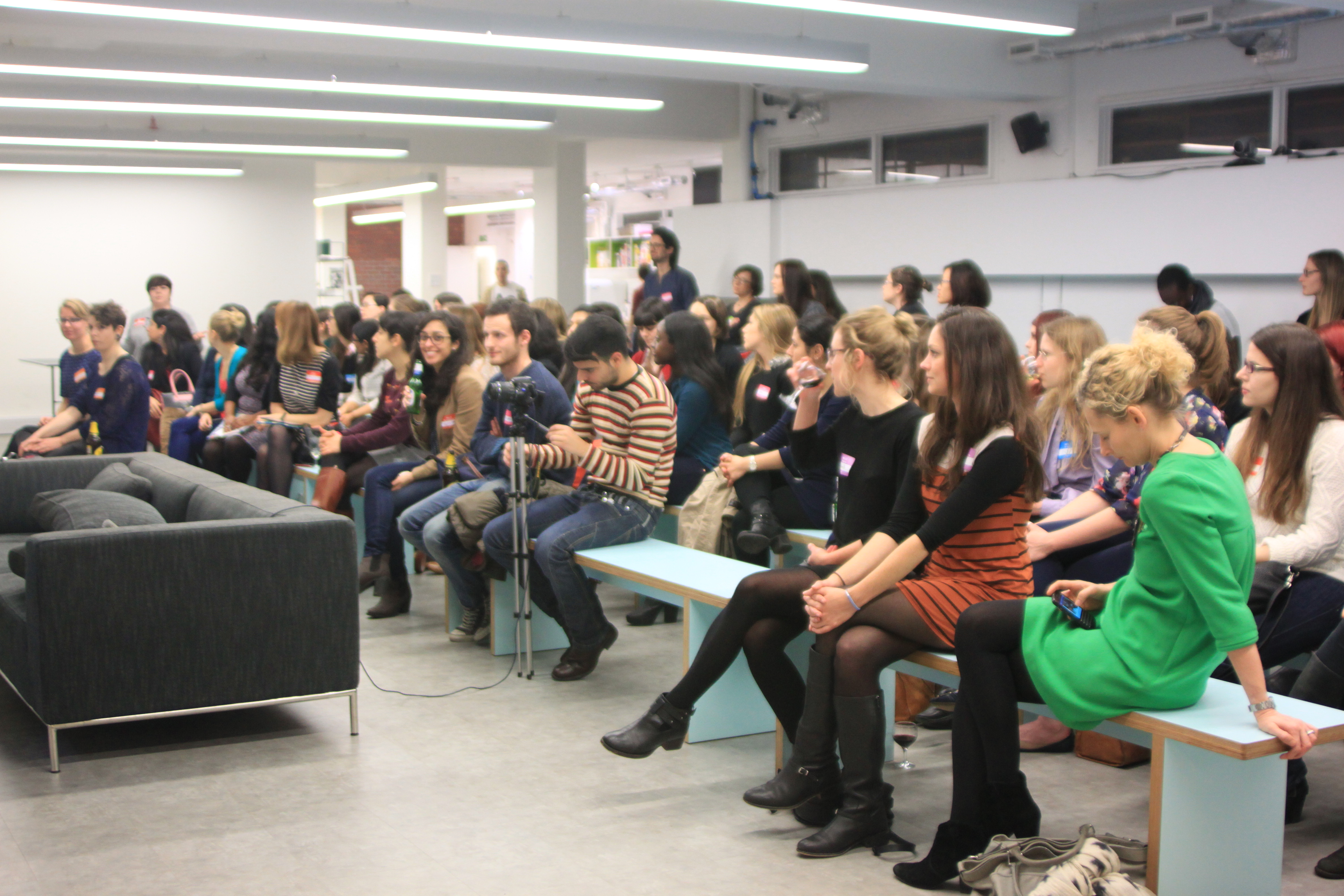
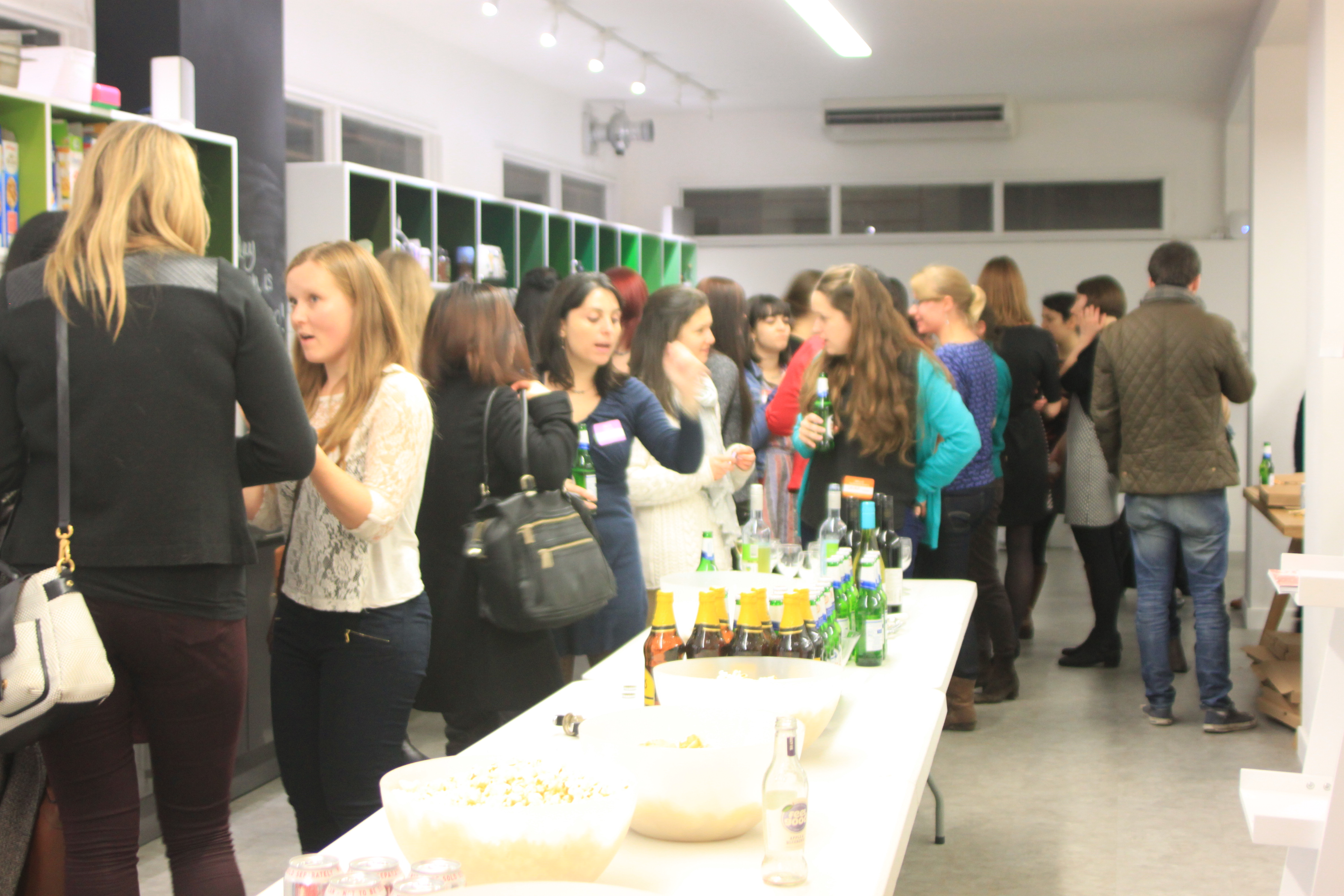
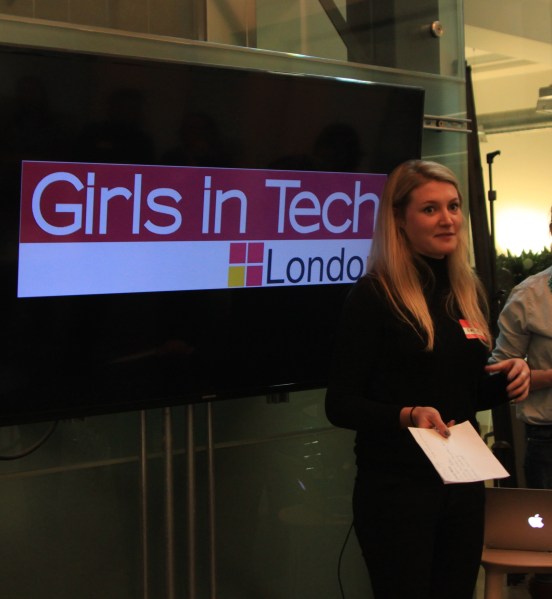
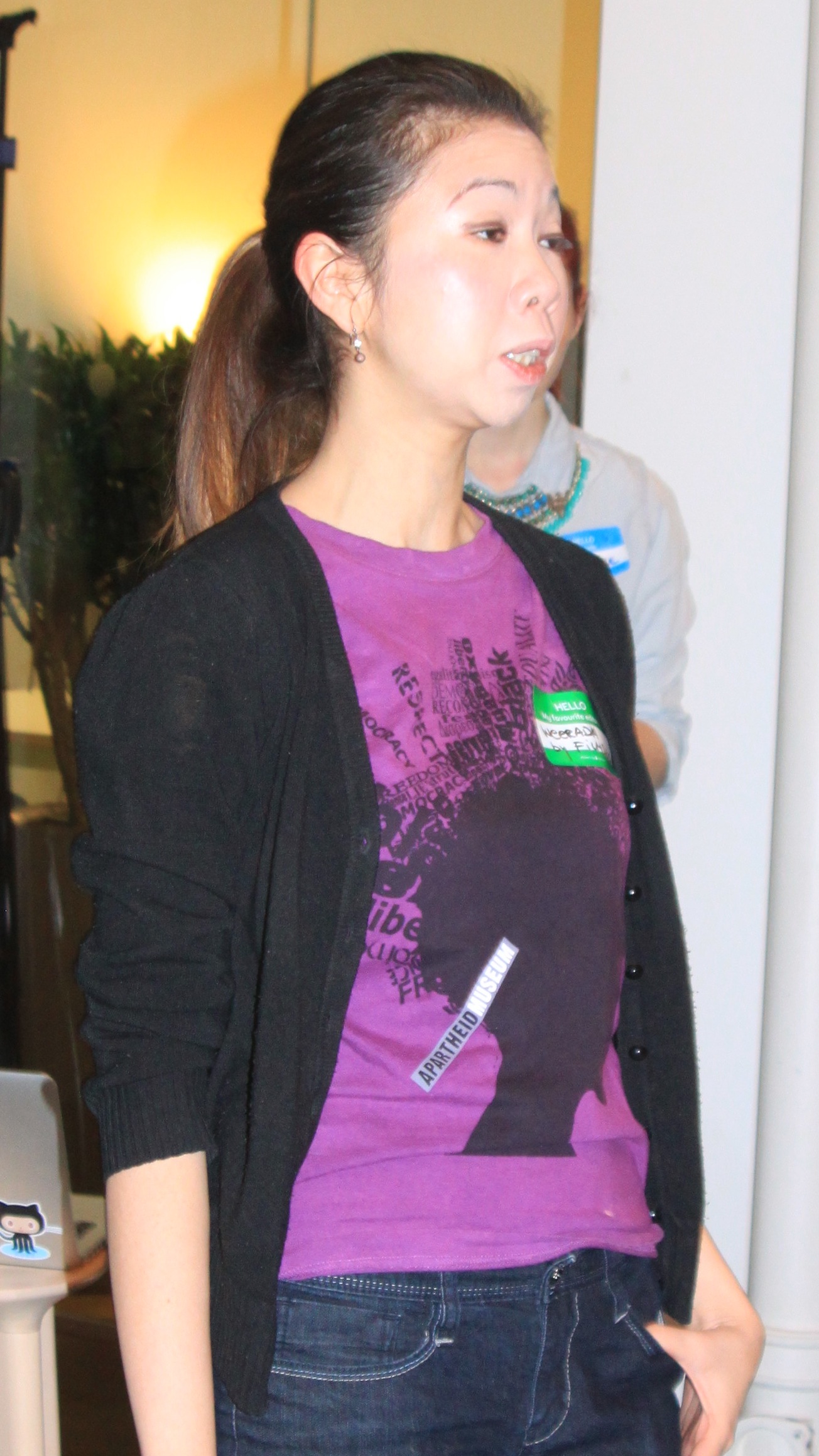
Our first event of 2014 at the moo.com offices on Tuesday 28th January was a great success! We had many ladies and gents come out, who all enjoyed Matthew Davies’ tips for acing the networking process.

Matthew Davies Girls in tech London

Matthew Davies is the founder and senior coach at Power the Change as well as a successful writer and a broadcaster. With his enthusiasm, wit and charisma, Matthew helped our audience to feel more confident when networking. If you weren’t able to attend, here are some words of wisdom for you:

  • Before an event, rehearse in front of the mirror how you want to introduce yourself.
  • When at an event, just remember the word “ACTION”. Its letters stand for Acceptance, Courage, Thoughts, I am enough, Ownership, Needs of others
  • Lean into your passions and you can beat the fear!
  • If you easily get nervous, turn the spotlight on the other person rather than yourself.
  • Always be a keen listener and never sell!
  • Finally, if you’ve managed all the above, here are some real pro tips: speak up in order not to slur your words and remember to pause.

IMG_8880

Thanks again to our amazing sponsor moo.com for the venue, pizza, snacks & drinks.

Watch this space for all the upcoming events and make sure to follow us on Facebook and Twitter to get updates.

In conversation with: Yasmina Siadatan from “The Apprentice”

Yasmina Siadatan

Every month, we catch up with London’s top girls in tech. In 2013, Yolina from Thoughtworks gave all graduates some useful tips, this month we chatted with Yasmina Siadatan.

Yasmina is an entrepreneur and BBC’s “The Apprentice” series five winner. When she is not running the award-winning restaurant she co-founded – Mya Lacarte – she is the Creative Director at Start Up Loans Company, a government funded scheme to provide loans and mentors for entrepreneurs.

Q: How can one know if being an entrepreneur is the right choice?

A: If you’ve got a feasible business idea – because you need an idea – and if you are prepared to put in the hard work, I think you should definitely come forward and explore becoming an entrepreneur. Running your own business is not easy and not everyone is able to do it. If you can show in a business plan that:

a) you know where your revenue is coming from,

b) you know who your competitors are,

c) you know how you’re going to be able to supply that product to the market,

plus, if you’ve got the confidence and the streak of character to do it, then we definitely would urge you to come forward and apply for a loan with the Start Up Loans Company.

Q: What advice you would you give to a person at the beginning of their entrepreneurial journey?

A: I think the piece of advice I’d give is “Don’t wait around!”. Time goes so quickly, because often when you’re at the beginning of your entrepreneurial journey you think “I’ll put it off another year” but it doesn’t get any easier. If you have an idea, you should just go for it!

Q: Having been in the TV program “The Apprentice”, you must know media very well. What would be your marketing advice to startup entrepreneurs?

The Apprentice TV Lord Sugar

A: Nowadays, so many things are important. You need to get your branding right, social media is also essential. You need to have a good website and it has to be, in my opinion, responsive to mobile and tablets because so much traffic comes from mobile phones, so you have to consider that from the beginning. Having a good presence on Facebook and Twitter is a really easy and quick way to get the message out to the right client. And if you’re based on location I would strongly advise to go and speak to the other businesses and neighbors in your area and develop a strong network. Go and speak to people, meet with them, go to the right events, just put your face and name out there. At this stage in your business, because you don’t have a heritage, your business strength relies on your brand and you have to build it by PR-ing yourself. This is a very cost effective way to market your business and product.

Q: Let’s talk women and entrepreneurship.

A: Typically the percentage of entrepreneurs is always skewed towards males and it always has been. In the UK, women make up only 19% of registered company owners, whereas the number of women coming forward to the Start Up Loans Company is 37%. It’s a lot more than the national average and we’re of course very proud of that. We believe that the statistic is so much higher because:

  1. The job market is much more fragmented now, it’s much more difficult for everyone in general to get jobs now, including women, so more people are looking towards entrepreneurship as a viable career option
  2. The Start Up Loans Company scheme is particularly attractive to both men and women because it’s a government scheme. Everything we do, from branding to communication, we make sure to attract both genders and even though we talk about business, (often considered a masculine topic) we make sure that in our imagery we highlight more women than men, I would say, so that the scheme doesn’t feel targeted to men only.
  3. We also lifted the age cap, we were only offering loans to people aged 18 to 30, but now one demographic we’re very much interested in targeting is women returning to work after they have had children. Mainly professional women in their mid-30s and 40s that want to go back to work but not in a 9-5 environment. Because of the cost of childcare, they’d rather stay at home and set up their own business from there, so they apply for a personal loan. Being an entrepreneur suits the modern mum lifestyle.

Q: What role does technology play in startups nowadays?

A: It’s hard to define technology. If by technology you mean a business involving technology, there’s not one that isn’t. Mainly all of our businesses have websites and use computers and generally all of them have a presence on social media. Tech is at the heart of any startup. But if we talk about businesses where tech is the core of the business itself, like businesses revolving around an app or software, then we’ve seen at the Start Up Loans Company that the technology sector ranks 2nd. It’s a growth industry here in the UK and we’ve got the skills set in this country as well, with people coming out of university having degrees in that area and turning their hobbies into a business, which is great.

Q: How does the Start Up Loans Company work?

A: It is an independent company fully funded by government, which we’ve been set up to provide loans and mentorship to people who want to start their own businesses. These loans are small-sized loans; the average loan is £5,700. Loans are repayable over a 5-year term at a 6% interest rate. We require no collateral or security on these loans, which are not provided by traditional financial routes (i.e. banks), but are provided in order to get people off the ground who want to start businesses. So far, we have loaned to 9,800 businesses and we’re aiming to reach the 10,000 goal quite soon. In only 13 months, this is quite an achievement. Our goal is to help 25,000 businesses by 2016, as we’re working at the pace of 30 businesses every day.

Startup loan company

Q: What are the requirements to apply for a loan?

A: We accept people into the program at the very beginning of their entrepreneurial journey, those who have a fully prepared business plan, or those who are already trading. However, we only accept businesses that haven’t traded for longer than 12 months. If they have an idea we help them turn it into a business plan and get it funded, as well as provide a mentor for 12 months. Every loan gets a mentor based on the need of that business.

Know someone who could be featured in this series? Get in touch!

← Back

Thank you for your response. ✨

London Startup Weekend: the fashion edition

London Startup Weekend December 2013

If we were in a John Hughes ’80s film, fashion and geeks would not mix. It would definitely be unlikely to see the chronicles of Molly Ringwald as a startup entrepreneur.

Luckily for us, we’ve put mullets, scrunchies and fluo clothing behind us, along with an antiquated mindset.

In today’s world, where Anna Wintour, editor in chief of Vogue attends the Webby Awards and Angela Ahrendts moves from fashion label Burberry to Apple, there are no preconceptions anymore.

Samsung smartwatch has just shown the wider public a glimpse of where technology (and fashion) can head next. ASOS has relieved thousands of us to fight the crowds to get hold of a garment. Net-a-porter brought luxury back to its true meaning. Notwithstanding how 3D printing and Chris Anderson’s foreseen “makers revolution” will impact our lives in the future.

London Startup Weekend 2013

That’s why there couldn’t have been a more appropriate moment to give the London Startup Weekend a makeover and launch an edition entirely dedicated to fashion, which took place in December 2013.

If you don’t know how the London Startup Weekend works, here’s its simple formula: no talk, all action, launch a startup in a 56-hour long, hands-on jam!

With 12 ideas to develop and only 3 winners, this edition’s top teams were Fashion Brief, a project-planning software focused on shoots and shows; Swappi, a super simple group fashion swaps and Wardro, a Pandora for menswear.

London Startup Weekend December 2013

Feeling inspired? Here there are the top tips from those who made it, London Startup Weekend’s mentors and judges:

– Background doesn’t matter

Don’t fret over the fact that you don’t know your Manolos from your Jimmy Choo’s. Nicola McClafferty, founder and CEO of Covetique, originally came from a finance background and never dreamed of being an entrepreneur. Her pre-owned luxury fashion business was inspired not from the pages of Vogue but from startups like Airbnb that focus on people extracting value from what they own. Her aim was to mainly focus on delivering a quality product in a lean way in order to streamline the logistics of moving luxury fashion. The hardest part? Deciding it was the right time to go for it!

– Listen up!

It’s good to be confident and pursue your dream, but beware. Amrita Kriplani, Senior Product Manager at ASOS, said “one huge problem with startups is getting stuck in your vision. Listen to feedback, don’t ignore it.”

– Do your homework

Lee-Jon Ball, founder of Alliants and fashion entrepreneur himself, said to always ask yourself a question: has the idea already been thought of? Complete a thorough research of what’s out there before diving into it. If there’s something similar out there, what can you bring to the table to improve it?

– Flexible business model

Vassilios Alexiou, Executive Creative Director & Founder at Less Rain, said that not all the good ideas should be developed following the steps of Mark Zuckerberg. Think if you can bring your services and expertise to existing firms and brands rather than starting fresh on your own and compete against giant competitors. Your project might not become the next best-selling app in the Apple Store, but it could more profitable.

– Don’t go solo

There are many opportunities out there. You don’t necessarily have to run your business from your bedroom, you may also seek out the support and partnership of bigger companies. That’s what Kevin Farrar suggests, who scouts the best talent for IBM and helps entrepreneurs grow within IBM.

What the Startup weekend showed is that great ideas know no boundaries, they can help solve problems in any sector, even saving fashion victims 😉

#LeWeb 2013: the future of the internet

LeWeb Paris 2013

This year #LeWeb focused on discussing the future of the Internet. Leaders shared their views on what they believe will drive the next generation of digital businesses. Girls in Tech London was there (see our tweets here!) and here’s a first recount of the ideas bounced around during the prestigious 3-day event by Josephine.

I will start by a quick not on the concept of “the internet”. I find difficult to understand it as a comprehensive object or concept. I have a hard time putting in the same box Snapchat, Ebay, Microsoft and Uber. Of course, all of them are connected because they relied on the world-wide web infrastructure. However, the business models and the products/services that they offer are dramatically different. Therefore I think it’s hard to find consistency and to identify trends & patterns across all of them.

Guardian’s columnist once wrote that the internet is about everything now, and so does no exist anymore as such. His article presented a valid point and at the time it was visionary because they were still were boundaries between online and offline. However, today, when I go home with a Uber cab, when I look for directions to a new address or when I tweet pictures of friends, it is no longer clear what offline life is. So what do we talk about when we talk about the Internet? Technology conferences too often focus on presenting tech as one thing consistent when I think what they describe more and more nowadays is the implementation of computer technology into businesses. Said differently, it is not anymore about tech, it is about innovation in businesses via the use of computer technology and people’s daly use of it. So to speak: the internet is no longer for geeks only.

This however, did not prevent anyone from speaking on stage and make predictions on the future of the Internet in general terms. Many speakers went on to discuss how their domain of the Internet is going to evolve – following the big common trends. They illustrated that without context and the sort of technology on which this future projections are built on.

The idea of the Internet that was left in me after #LeWeb was not clearer: crypto-currencies like Bit-coin will play a bigger role, more will choose entrepreneurship as their career path and of course mobile will be increasingly essential along with cloud-based technology.

Everyone seemed to be blind to the fact they were talking for the people that use tech and see internet as part of their lives. No one asked about the internet as an experience and hard-ware technology at the very source. It was assumed that new internet user consume internet like geeks do. My problem with that is less ethical or social, but really demographical. The people that will use internet tomorrow in bigger numbers will be from Asia and Africa, not the West. As such they will have a dramatic influence over the way the internet stretches and develop, no? So no one talked about what will be the impact and take up of the internet in countries and from people that do not have access to it yet. Or that use a common computer or same mobile phone for a whole family.

Except for one speaker – the very first to open the conference – Fred Wilson, venture capitalist at Union Square Ventures.

Fred Wilson LeWeb Paris 2013

He laid down the macro trends pushing people and societies that will direct and drive the internet. He summarised them in 3 categories with concrete examples.

1 – Bureaucratic hierarchy is being replaced by digital technologies and networks. Twitter, Youtube or Airbnb are changing media the entertainment and leisure industry. The pyramidal hierarchy in business is being challenged by quicker communication and lower transaction costs. Bureaucratic process won’t be needed anymore and will be replaced because of inefficiency.

2 – Unbundle of services. Before, services were provided by one business (i.e. Royal Mail, or banks). It was expensive to produce and deliver and that’s why businesses were structured as a single full-service entity. Nowadays, with network and communication technology, it is cheaper to set up highly targeted services such as Netflix to buy movies, e-libraries to access books and Tinder to find love.

3 – Personal involvement in the network. Everyone of us is now personally involved in the network because enabled by mobile devices. From Uber, Tinder to Taskrabbit, people are using the internet more often for local search, to assist them with their daily life.

In a few words, he concluded that the internet just follows life, not the contrary.

That for me smartened the evening discussions: humans are shaping the future, including the internet, not the other way round. We are restlessly asking technology to answer our crazy imagination and desires, so ultimately the future of the internet will be what the most of us want and make it be.

Follow the author on Google+

Girls in Tech Represent! at #LeWeb13

Startup VIllage and Google Workshop under construction at the eve of the event

Startup Village and Google Workshop under construction at the eve of the event

#LeWeb, the annual conference gathering thought leaders and innovators – which started 10 years ago – is taking place this week in Paris. For 3 days, globally-minded startups, innovators and leaders from the tech industry will discuss the future of the internet. We couldn’t resist the opportunity to be the witness and report on what’s hot and ahead in tech.

Here is a quick heads-up on who, when, why, how, where and what to expect from #LeWeb reported by Girls in Tech London 😉

  • Live reporting

Follow us on Twitter and Facebook for a live stream and follow our blog for critical insights into some of the hottest topics of tech.

  • What’s hot, cold or UFO in Tech?

This year, LeWeb is questioning what’s ahead in the next 10 years in the internet space. What can we expect if we look back at the last fast-paced 20 years?

Looking at the programme so far it seems that Geraldine & Loic have planned to answer this with a schedule that brings recognised, strong industry leaders of the last decades (Paypal, Microsoft, Apple, etc) and some of the most innovative businesses of the recent years (Uber, Evernote, Twitter, and the likes).

  • 3 days, 3 perspectives, and many, many topics covered

Looking at the sessions planned, the agenda seems to articulate this theme in 3 steps:

Monday – The first day, successful internet industry leaders of the past ten years will describe their vision of the future, perhaps telling the story of their company, what made them successful, and what’s their strategy to sustain that success in the next ten years.

Tuesday – This day could be titled: the state of innovation and entrepreneurship. Looks like a lot of sessions are trying to define what it means to be an internet entrepreneur, what are the current problems (#mobile, #meditation!, #Emerging Countries,…)  and how to make yourself innovative moving forward.

Wednesday – Internet advocates from the French Government are joining the leaders of cutting-edge technologies (artificial intelligence, connected TVs, 3D printing) to close #LeWeb, and (eventually) address its core theme. The big boys that have invested and are investing big money in the future will talk about their projection and the bets they have made for the next 10 years.

  •  What to expect 

Our partnership team will be on the ground with Marie Hardel and Josephine Goube, acting as agent representative of Girls in Tech London, along Roxanne Varza, our leading coordinator for Girls in Tech UK and France.

With their critical eye, sometimes on the (bad) edge of bitchiness, we will be reporting for GIT on what we think are the most thoughtful and meaningful ideas of #LeWeb. A first glance at the panel of speakers, it already seems like the gender ratio status quo is yet to be disturbed. But enough of feminism and moaning, let’s get this changed!

Girls, I count on you to be loud, to tweet and make women more visible online and offline at #LeWeb. 😉

 @josephineGoube

Follow @GirlsinTech_UK to get a live stream of critical tweets from #LeWeb about the Internet’s past, present and future.  Tweet at us, share your insights, and if you are at LeWeb too, please come say hello!

Recap: Networking Night at Warner Yard

IMG_6990

Monday’s Girls in Tech networking night at Warner Yard was a great success! We had many ladies and gents come out, sharing their interesting startups and other projects they’re working on.

We started off with a talk from Emily Atkinson (events team), introducing Girls in Tech London, who we are, what we do, and how we can collaborate with others. Also that we have some very exciting events planned for 2014!

IMG_6972

In order to show support for GIT London, we took pics of our guests with a flashy sign 🙂

IMG_6963

IMG_6962

IMG_6964Then we enjoyed a round of lightening talks from a few attendees:

IMG_6983IMG_6984

IMG_6985IMG_6988

Thank you again to our amazing sponsors, Warner Yard and Playfair Capital, for the space, pizza, & drinks.

Can’t wait to meet you in 2014! Watch this space for all the upcoming events.

Founder Talk: Emma Owens

Screen Shot 2013-11-29 at 13.48.30

This week we caught up with Emma Owens, co-founder and CMO of Rormix, a startup from Manchester that discovers music videos of emerging artists. She began her co-founder journey at just 23-years-old which is a huge accomplishment for her already.

Q: What has been your journey so far in tech?

A: I was introduced to tech when I met young entrepreneur Amman Ahmed after graduating Uni in 2012. We met and chatted about his startup and I came on board working with him on his first business, roundwaves.com, as a marketer. To explain briefly, Roundwaves works with artists in developing countries and creates music with a solution e.g. sleep music, concentration music and my personal fave, dog music! In terms of revenue Roundwaves is a YouTube Ad Network and Itunes structure.

I was given total freedom to do as I wished, something which was very alien to me but definitely my favourite part of working in a tech start-up.

At Roundwaves I improved viral growth by 250% and created a social media community. With Roundwaves automated, we moved on to build a new tech startup, funding it from the revenue of Roundwaves.

Now at 24 I am a co-founder of tech company Rormix – Discover Emerging Music Videos, something that I’d never imagined but is now my proudest achievement. Now we are a team of five and we have the best job working on the Rormix app. Every week is a different adventure.

Q: What have been your biggest challenges so far as a young co-founder?

A: As a young co-founder I have found that my biggest challenge is probably facing myself. I think I should be more confident as I am sometimes concerned that people may think I’m inexperienced. Interacting with VC’s and investors can sometimes be a challenge when you are a young tech team. This is where the knowledge of mentors is so important so I think that is something that is essential to incorporate. In general I have found that being a young co-founder has probably played in my favour as I can adapt to situations easily and I am so eager to learn. Plus all the experience I am gaining feels very valuable.

Q: What have been your biggest challenge so far as a woman co-founder?

A: To be honest, when I came into tech I didn’t realise that there were so few women in this industry, so when I went to my first few networking events and was the only woman there, or one of two women there, I was really surprised. I love being a woman in tech because I want to encourage other females and show them that this is the best industry to be in if you are passionate about it of course. However I also find it extremely difficult at times. At certain events I have been treated very differently to my male colleagues, even though we are at the same level. Some men will not shake my hand, even if I started the conversation. Some guys will not make eye contact and it has been something that is so obvious that other people have noticed. So this is something that I am very keen to change since the most successful technology companies are made up of both genders. It’s quite shocking how such a forward facing industry can be so very backward in this way. I don’t want to sound like I’m against men because that’s completely untrue I just want to make women feel more comfortable in a tech environment and that is everybody’s responsibility.

Q: When was Rormix launched and what are the company’s accomplishments to date?

A: Rormix the app was launched at the start of October on both iOS and Android. Since then we have got 4500+ downloads in more than 100 countries and have had some great feedback. We’ve also been featured in The Next Web twice as one of the top music discovery apps next to Shazam and some other huge players. Something we were really proud of.

Q: Tell us about your current role and responsibilities as co-founder and CMO at Rormix:

A: At Rormix I cover a lot of things (typical startup) but my main role involves user acquisition, marketing and social media management. I’m trying to get the app out to as many people as possible so I plant seeds in as many places as possible. I reach out to users to get feedback – so for example I spoke with Reddit users about the Android app and this was a massively important point for us because we changed the app based on their feedback.

Q: Is there anything new you’re planning on learning or focusing on to become a more well-rounded entrepreneur?

A: I would love to learn to code, even on a basic level but at the moment all my time is going into Rormix. I am just keen to keep learning – I seem to hear new things everyday, which I love. In terms of the future I am keen to push for change for women in tech. I want to see more women at events, speaking and generally having more of a presence, plus any prejudices that are currently in place need to disappear and I would like to help towards that.

Q: What is one piece of advice you’d offer other girls interested in tech?

A: Use being a woman to your advantage, be strong, be a pioneer, ask questions (so you can learn!), push yourself forward through the ignorance and enjoy it!

Networking night with Girls in Tech London

origin_3154991047

photo credit: ecstaticist via photopin cc

We’re happy to announce a final event for 2013: a networking night sponsored by Warner Yard & Playfair Capital. We’re warming up for 2014 and want you to join us for what’s to come!

When: Monday, December 2, 2013 at 7-9pm
Where: 8 Warner Yard, London EC1R 5EY
What: Beer, pizza, & networking

Book your spot here: http://goo.gl/VJciuR (and see more details about the event)

As always, men are welcome too. We can’t wait to see you!

Many thanks again to our sponsors:

logo3

In conversation with: Yolina Sotirova

Screen Shot 2013-11-19 at 14.43.54

photo credit: Thomas Hawk via photopin cc


Every month, we catch up with London’s top girls in tech. This week we chatted with Yolina Sotirova, a Graduate Consultant at ThoughtWorks.

Q:What is it like to be a woman who’s in a technical world?

A: It is not as scary as it sounds. As long as you get over the fact that you will have to work with know-it-all men every day, it is just great! I find it very empowering and inspiring, being part of the industry that drives the change and innovation in the world nowadays. There is no better feeling than seeing the product you have spent weeks and months of work, being used and appreciated by others who are in need.

Q: What is one piece of advice you’d offer women who want to work in tech?

A: The tech world is big and exciting, but not as scary as it seems. There is a right place for everyone, you just need to take a leap and find it. The only things you need to have are passion and love for tech, and determination. Then, you are as good as everyone else out there. And frequently even better than a lot of people.

Q: Can you share one awesome and one not-so-great experience you’ve had concerning the stigma of women in tech?

A: Awesome:
My first project in TW involved a functional programming language called Clojure. I got really into it and I started attending various user groups and trainings related to it. Last month I attended my first EuroClojure conference. There were 2 female speakers in the programme, both were so awesome! They were so geeky, techie and very confident, they inspired me and motivated me to be like them one day, to get up on the stage and give a talk about the new programming language I put together myself. Furthermore, the whole community is great. The ratio of men to women is way too small, but this does not make it an unsafe and stressful environment at all, even the opposite – people are friendly and willing to talk to you, share with you and learn from you.

Not-so-great:
I have been in multiple situations, where in a group during a technical discussion, I have been ignored in various ways from the conversation. Some people just tend to assume by default that if you are a woman, you don’t know enough to bring value to the discussion. Well, as a result, I just had to start learning to be more aggressive and make my word heard during discussions.

Q: What can be done to prompt more women to choose a career in tech?

A: I believe that to lead by example is the best way to go. More opportunities, where school and university girls could meet successful women in IT, would be very inspiring and motivating for them. I think part of the reason girls get scared away from an IT career is because they don’t actually get to meet women that are already in the field. A majority of university computer science professors are male. Mentoring programs for school girls – being able to meet, work and be taught about programming and technology by women already in IT, could help them gain more confidence that being a female technologist is something achievable. Girls need to have role models from a very early age. They need to see how cool and fun it is to be a geek.

Q: What, in your opinion, are the next big trends in tech business?

A: Functional programming languages and big data analytics – two very cool things that are rising up and will find their place on the tech scene in the foreseeable future.

Q: Tell us a little about ThoughtWorks and its commitment to creating a socially and economically just world.

A: ThoughtWorks is an amazing place to work at – a safe and nurturing environment, where people are bright and energetic, filled with positivity and drive for change. TW empowers you to be brave, to think out of the box and try to influence the world in your way. For example, in the summer they had organized a TW EU Dragons Den where we were pitching ideas for different projects (related to innovative technologies, delivering more business value to the company, contributing to the community). The prize was the support with time, funds and resources from TW to turn those ideas into reality.

ThoughtWorkers are encouraged to get involved in all kinds of open source projects, fundraising initiatives, volunteering work and much more. We try to find ways to influence the world in a positive way through technology. We are involved in various projects in healthcare, education, global development and activism, where we try to give our contribution for a better society. A great example is the contributions that many ThoughtWorkers have done, as part of the initial project or in their free time, to develop RapidFTR – a mobile app to help field workers reunite children with their families after big disasters. One of the main reasons behind TW having offices in countries like Uganda, South Africa, Brasil and Ecuador is to try and bring less privileged people into the world of technology, giving them a chance to develop their capabilities, regardless of their background or education.

Q: Why did you choose a career with ThoughtWorks?

A: I have been doing maths and programming since I was 10 years old, so when the time came for me to decide what I want to do for living, it kind of came out naturally to me. IT is just part of my life, I love it and I enjoy it immensely. I have been with TW as a grad for 10 months now.

Thoughtworks is a global technology company whose mission is to better humanity through software and help drive the creation of a socially and economically just world. You can catch Yolina and ThoughtWorks CTO, Rebecca Parsons, at their event tomorrow (November 20) – Let’s Talk About Women in Technology.