Founder Talk: Grace Regan of Clippet

MR2A0259

There is no doubt that more and more women are starting to take on entrepreneurial roles in business, which is inspiring other women to have the courage to get out there and start their own thing.

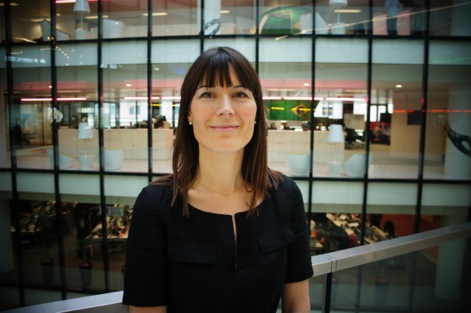
What’s even more inspiring is seeing some of those women as young as Grace Regan, 23-year-old co-founder of audio news app Clippet.

We caught up with her this week on working in startups, what inspired her to do this app, and why traditional news outlets need to change the way they do things.

Tell us about Clippet.

Clippet is an audio news app, which mines news from around the world to curate and create audio ‘clippets’ that last no more than 60 seconds.

We’re aimed at young professionals, university students and metropolitan commuters. We know our users seek a deeper understanding of the issues of the day but don’t have enough time to wade through various news platforms. We therefore do the hard work for them, curating, researching, writing and recording short digestible news clippets, which keep our listeners up–to–date with what’s going on in the world. 

What are your thoughts on business being so content marketing focussed in 2014? Did that inspire you to start Clippet?

I think the trend towards content–focused business is a reaction against previous tendencies for tech–led companies to simply aggregate 3rd party content and regurgitate it without thinking about the consumer and their needs. I was inspired to start Clippet because I believe news journalism needs a facelift – it’s become stale, old fashioned and irrelevant to a modern audience. The content of traditional media has become almost impenetrable; it’s incredibly time–consuming to pick apart. Why not just put information in the simplest, clearest and most conversational way possible? This is the ethos behind Clippet’s content. I think this is a general trend amongst new media content. I was excited to read Sir Howard Stringer’s report on BBC News and his suggestion that the BBC must understand it’s audience more and make their news more relevant to them. In order to engage people with your content, it must connect with them on a personal level. 

What have been your biggest challenges being an entrepreneur?

I think the biggest challenge has been learning to know when you’ve made a mistake and act upon it. So much of business relies on gut instincts. There were occasions in the early days of Clippet when myself and my business partner circled around taking action/changing direction on something because we didn’t trust our natural instincts enough. We’re getting better at this! It’s also challenging to keep pushing yourself to improve when there’s no (or few) people breathing down your neck (like in a normal job!). I’m learning to constantly challenge myself and push myself to keep improving.

What have been your biggest challenges being a woman in an industry driven by men?

To be honest, I haven’t noticed my sex getting in the way of my day–to–day work. I suppose both the journalism and tech industry are dominated by men and this has been very noticeable (especially when you go to panel discussions with industry experts and there’s no women!). The fact that we’ve built our own team of young journalists, producers and developers means that traditional gender hierarchies simply don’t exist within Clippet. That being said, I do find that ‘business talk’ and ‘tech talk’ is often a domain reserved for men. I’m often given a surprised look whenever anyone hears that I work in the app world and I think it’s this assumption that women and tech don’t mix that needs to change.

What are some of your proudest accomplishments in your entrepreneurial journey so far?

I think it would be spending months and months researching and developing our audio content (tone, style, format etc.) and coming up with a formula I’m proud of (although we’re constantly developing and improving it!). The most satisfying part of this has been being able to pass the ‘Clippet style’ onto our team of journalists and editors and watch them learn and grow into the Clippet mind–set.

What advice would you give to your 18-year-old self?

Hard work pays off! Around this age I really began putting my all into everything (I was a bit of a disorganised mess before!). Looking back, I’ve realised that every achievement (no matter how small) so far has been down to pure grit, perseverance and hard work.

What advice would you give to girls/women interested in joining tech or startups?

Just do it. Ignore all the preconceptions of tech being a male–dominated world (it will never change if girls continue to think like this). There’s nothing more rewarding than working for a start up – it’s a lot of work but it’s worth it. Also, keep challenging yourself – whether it’s trying something new at school or leaving your current job to pursue something you’d rather be doing.


UK gets entrepreneurial boost

photo credit: opensourceway via photopin cc

photo credit: opensourceway via photopin cc

Bleak times no more. Data shows that Britain’s enterprising spirit is stronger than ever.

Many organisations, including StartUp Britain, Rockstar Youth and the government’s own Start Up Loans scheme (read our interview with the creative director) reported a raise in the applications, especially young people between 16-30. In fact, the Prince’s Trust startup helpline received +42% in 2012 alone.

Furthermore, since 2008, UK’s youngest entrepreneurs increased by a third and more than half of the new businesses were founded with less than a grand.

The internet has the potential to make entrepreneurs of us all – Annika Small, Director of Nominet Trust.

The weak economy and lack of job security, prompts more people to bet on themselves rather than seeking opportunities with bigger companies. “If you want the economy to change, we need more people to stand up, be bold and brave and create the jobs that are not there right now,” entrepreneur Kieza De Sousa, 19, told to the BBC.

And it seems that women have responded positively to the call for change. Figures highlight the growing role women are playing.

Women-led businesses annually contribute a whopping £70 billion to the British economy.

In the UK however there is a clear enterprise gap between men and women. Researches indicate that an extra 150,000 businesses would be created if female ownership levels were the same as men.

The UK ranks only sixth out of 17 countries for female entrepreneursa new study has shown, even though a recent report released by Sage UK revealed that half of young women aged 18-24 were keen to start a business, many wanting to break away from the traditional 9 to 5 to pursue their passions.

More women in the boardrooms bring positive change at a wider scale too. Bringing women into businesses creates what Michael Porter and Mark Kramer of the Harvard Business School call “shared value”—it helps companies while helping communities too. 

There is no doubt, that the increasing numbers of women in the economy has helped fuel significant growth everywhere. And economies that are making the shift more effectively and rapidly are dramatically outperforming those that have not. – Hillary Clinton

Feeling inspired yet? If you look for some more motivation, check out our Founder Talks and interviews with the top Girls In Tech. And you if you want to share your journey with us just get in touch on Twitter & Facebook.

Recap: Rooftop networking at White Bear Yard

One week ago, we enjoyed a lovely evening of speed networking thanks to White Bear Yard who kindly offered their rooftop.

We kicked off with a speech from our Managing Director, Katy.

IMG_9947

And promptly set off for some speed networking, 3 minutes at a time!

IMG_9954

IMG_9958

IMG_9956

Luckily we got to disturb a few of our favourite ladies for some group pics…

IMG_9966

IMG_9951

IMG_9967

Thank you to all who attended! It was surely a success. Stay tuned for details of our next event on fundraising for your startup, 25th June!

IMG_9975

Founder talk: Sinead Mac Manus

Sinead Mac Manus Fluency

Every month, we catch up with one of London’s brilliant startup founders. This week we chatted to Sinead Mac Manus.

Sinead is not only the CEO and founder of Fluency but also an experienced trainer, speaker and author. She founded her digital wellbeing company 8fold in 2010 and launched the Digital Academy, training low income women with digital skills, in 2011. She is a Fellow of the School for Social Entrepreneurs, the RSA, and an UnLtd Award Winner.

Q: How did you come up with your startup idea?

A:  My background is a digital coach and trainer to small businesses. For the past four years I have been working with them to overcome stresses about engaging in digital and showing them the potential that the web and social media can have for their business. But many of my clients were just too busy to implement much of my advice so I back in 2011 I saw a gap in the market for providing outsourced digital services and with help from UnLtd and then the Nominet Trust, started training low income women with these skills.

Q: What are the company’s objectives?

A: Fluency is a learning platform and crowd-work marketplace that gets young people into work. Myself and my co-founder Ian, founded the company to solve two big problems: the fact that there are limited work opportunities at the moment for young people, both here in the UK and across Europe, and the lack of digital expertise in small businesses in the UK.

Ian and I met at the beginning of last year and we bonded over a passion to help young people get into work. Youth unemployment remains stubbornly high here in the UK and is catastrophic in many European countries such as Greece. Spain and Italy. If we don’t provide work opportunities for this generation of young people, then we run the risk of a ‘lost generation’ with knock-on effects in communities for decades.

We were lucky enough to be accepted onto Bethnal Green Ventures technology incubator in July and have been building the platform since then. We teach our young people in-demand skills such as how to build a website, how to market a company on social media or how to optimise content for Google. Our learners complete digital challenges and collect badges to demonstrate their learning. But what’s really unique about our platform is that as our learners get mastery in a subject, they become eligible for work on the crowd-sourcing platform. In this way they can ‘learn and earn’ at the same time.

Q: What have been your biggest challenges as an entrepreneur?

A: One of the biggest challenges we have faced is one facing most startups – raising investment. There is a cliff that you fall off once the incubator money runs out and it’s takes a long time to raise investment – I wish I had know just how long when I started! We’ve gotten over this by just getting out there and talking to as many investors as possible and we are confident that we will close our seed round in the next month or so.

Another challenge as a startup founder and CEO is just the amount of things to do on a daily basis! One minute I’m talking to investors, the next I’m mentoring my staff, the next I’m poring over cash flows. I’ve always been a productive worker but this job requires that you are very strategic with your time – something I am learning about every day.

The last challenge we have faced is people not understanding that we are a social business – a commercial company yes, but one that wants to change people’s lives for the better. We’re not a charity but creating social impact is at the heart of every decision we make. I don’t think there are enough successful social ventures out there to point to and say, hey look there’s a new way of doing business, but we intend to be one and lead the path for other social tech ventures.

 Q: On the other hand, what have been your biggest accomplishments?

 A: One of our major recent successes is getting investment from Forward Foundation which has meant we can work with more youth partners and hire a key member of staff. We were successful because I had built a relationship with the Foundation long before we approached them for funding and we share the same values in help young people from disadvantaged background succeed.

Another thing we are very proud of is working in partnership with The Prince’s Trust. They have been hugely supportive of Fluency especially as we are a new startup. We will hopefully be working together to ensure that the young people that come through their programmes have the right skills needed in the workplace and we can deliver that for them. This relationship came from a tweet so it shows the importance of social media!

Our last success is more of a personal one for me – it’s having the good fortune to meet my co-founder Ian. I have worked by myself for such a long time that I wasn’t sure how I would cope with a business partner but it’s amazing to have some else to share the highs and the lows with. And he’s an amazing coder too!

Q: What are your thoughts on the future of women in technology? 

A: I personally have not had any discrimination for being a female co-founder and CEO and we try to maintain a gender balance in the company, though with our new Head of Digital Learning role we have now swung back towards the male! When I first started going to events at Google Campus in 2012 I remember standing out as a women but now it tends to be 50/50.

I would like to see more young girls and women take up careers in technology, entrepreneurship and digital and I think it’s the responsibility of women in the industry to speak out about how great technology is to work in and actively mentor younger women. I think getting young people, of both genders, interesting in, and exciting by, digital is the way to go and something we are heavily promoting at Fluency.

Founder talk: Anna Bance

Anna Bance Girls Meet Dress

Every month, we catch up with one of London’s brilliant startup founders. This week we chatted with Anna Bance, the co-founder of Girl Meets Dress, an e-commerce website where you can rent dresses and other designer wear.

Q: How did you come up with your business idea?

The Girl Meets Dress story began in 2009 when I was working as UK PR Manager for French luxury brand Hermes – and like my previous roles in the fashion industry, it involved lending the collection of dresses and accessories out on a daily basis to fashion magazines, shoots, celebrities and journalists… I thought to myself “Wouldn’t it be amazing if we could all borrow dresses for just one event, and wear a different designer for every event in our calendar?”. When my co-founder and I looked into the market we saw that no one was doing it. We were the first company to rent luxury fashion online and it is wonderful that Girl Meets Dress is now pioneering the way for rental as a new and exciting e-commerce category of its own. I am really happy with the fact that we’ve created a fantastic product for all women to have their Cinderella moment. We all need to feel amazing for life’s special moments and Girl Meets Dress democratizes fashion, enabling millions of women to afford luxury every day.

Q: What have been your biggest challenges so far as an entrepreneur?

Self funding the business: When we started, ensuring we have a full team in place while bootstrapping was no easy feat. We were lucky to find so many hard working and ambitious staff to stick with us and the vision. Becoming knowledgeable in so many different areas is challenging but it definitely helps to have 2 co-founders with complimentary and different skill sets. When launching we found that many women wanted to try on dresses before their big night out which lead us to create the extremely popular service called the “Advance Try On”. If a customer’s event is over 1 month away they can receive and try on the dresses ahead of time to choose their favourite. That dress is then re-delivered for the event date free of charge. For Girl Meets Dress to work we also needed to get PR through the door: When launching a new company, one of the most important and impactful skills to have is the ability to promote and market the product and brand to get that all important traffic through the doors. PR for us was a huge element in growing the awareness of Girl Meets Dress so I couldn’t have wished for a more suitable previous career (as UK PR Manager for Hermes).

Q: On the other hand, what have been your biggest accomplishments?

Becoming the first company in the UK to rent luxury fashion: When we looked into the market, we saw that no one was doing it. We wanted to create a concept that enabled us to provide a timely and innovative fashion solution during the recession which is why we turned to rental. We think it created a new way for women to shop: Girl Meets Dress is a fun concept and hopefully I have answered women’s prayers by giving them a new way to shop – a fun and affordable way to wear the best dresses in the world. Rental is a way for consumers to extract all the value without none of the headaches; women can now easily wear more relevant, trend led, time-sensitive fashions, while continuing to invest and buy only in those classic pieces which will stand the test of time.

Furthermore, having the largest selection of dresses and accessories from 200 designers from over 50 countries: Girl Meets Dress is very attractive to designers because many women will typically only have tried a few high end designer brands in their lifetime, if any. With rental, designer labels get to be introduced to potential customers on a regular basis. 98% of our customers try a new brand they have never worn previously in their life. That is a huge marketing opportunity for designers trying to reach new customers + the next generation on a mass scale.

Q: What are your thoughts on the future of women in technology?

The beauty of business is that any woman with a passion for making things happen can be an entrepreneur. There are no rules and launching online means you can test the concept while keeping costs very low, and stay in your current job if you need to until you are ready to commit fully. Women should just go for it. Don’t over think it. There will never be a perfect time to leave your secure job, risk your salary decrease, take a chance on an idea which might not work – but what’s the worst that can happen? You’ll go back to your previous role until you come up with the next idea!

More room for marketing mobile products to women

More Room for Marketing Mobile Products to Women

Remember last year’s “Are You Geared Up?” commercial, which pitted two men against each other in a battle for a girl, making the point that the man with the Smartwatch had a better chance of success than the man who’s constantly fumbling around with his cumbersome smartphone? While the advertisement was an obvious attempt at pushing the convenience of a wrist device, it touched on the more obvious “what a girl wants” tropes that drive a large sector of the tech market. It was also a small example of how tech companies are purposely marketing toward women, who are becoming more of a dominant presence in the tech world.

Companies are learning to go with women. The Little Miss Geek blog cites an eDigitalResearch infographic, which shows that “The rise in phone ownership saw an increase in women using them – 58% over 42% of men.” The website She-Conomy says it best: “It’s much easier to market a product your audience wants. And hearing the female voice early rather than later could mean a significant difference in your bottom line.” In a Verizon Wireless article entitled “The New Face of Tech…Is Wearing Mascara,” they used information from the Bureau of Labor Statistics to report that “the tech industry added 60,000 jobs, and more than half of those positions—60 percent to be exact—went to women.”

So, it makes perfect sense that tech companies are moving in the direction of targeting women with their products. Next month, when Samsung releases its new phone, the Galaxy S5, one of its selling points will be that it’s both dust-proof and waterproof. Some places are already finding ways to spin this feature into something that will attract women. For example, this article entitled “Samsung Designs Waterproof Galaxy S5 for the Shower” implies, in a very obvious and strange way, that the phone will become every woman’s bathroom accessory. The only problem with this is that the waterproof feature was probably added as a protective measure instead of a go-ahead to submerge the phone in water. Now, add the fact that the article in question is accompanied by a photograph of a businesswoman sitting in a portable toilet rather than taking a shower, and you have all of the workings of female-targeted story.

In Samsung’s case, marketing to women might be a great idea following some of the criticism it took last year over a television ad for the S5’s predecessor. Still, the company has been making considerable ground when it comes to reversing consumer’s brand loyalty—especially among women who used to have an allegiance to iPhones. Mobile Marketer reports that “Samsung has slowly been stealing typically brand-loyal iPhone users away as Apple loses some of its edge, which will likely continue into 2014.” It then goes on to identify women as the majority of these “vulnerable” iPhone users.

But however they’re described, there’s no denying that women are the key to growing profits. And as that same Little Miss Geek article points out, “Two 17-year-old girls from Central Foundation Girls’ School in the UK, through Apps for Good, have actually designed a gardening app that impressed private mobile investors.” So, gradually, younger generations of women are making sure that they won’t have to worry about being targeted by marketing. Instead, they’ll be the ones in charge of making and marketing the products.

About our guest blogger: Sara Upton is a newcomer in the world of online journalism. You can find her writing about a number of different topics, but her favorite is tech and how it relates to the advancement of women in the industry.

Founder talk: Aurore Hochard

Aurore Hochard Taskhub

Every month, we catch up with one of London’s brilliant startup founders.

We caught up with Aurore Hochard this week to find out more about her entrepreneurial journey and her startup Taskhub,  the online marketplace for local services. We admire that she worked as a teacher in the US and the UK before deciding to change her career, even though she had no tech background!

Q: How did you come up with your idea?

A: I had the idea for Taskhub whilst studying Law at City University in 2011: a friend became a mum and wanted to spend more time with her baby by finding locals through a friendly and trustworthy online platform to take care of the small day to day tasks. I initially only wanted to help her find websites to outsource locally her chores and errands but could not find any so I decided to build such a website.

Taskhub is an online marketplace, connecting those in need of help to those who want to earn extra money and meet new people. Imagine a digital community notice board. With Taskhub my vision is to connect people locally through paid tasks and volunteer opportunities.

After being incubated at Wayra UK– an incubator – for 9 months, Taskhub was launched in March 2013. We received further investment from Telefonica and signed a partnership deal with O2.

Q: What have been your biggest challenges so far as an entrepreneur?

A: I had no tech background. When I came up with the idea of Taskhub, I could envision how this platform would/should look like but without any tech background, I did not have any idea of how much work and time it would take to build it up. I’ve built the right team of technologists who take care of the tech side of things extremely well. I have made some efforts to learn and understand how our system works but mostly I let the development team handle that whilst I use the skills I have to establish connections, partnerships and ensure adequate funding.

Although I came up with the idea of Taskhub, my partner Rahul Ahuja is the one who transformed my idea into a business idea. It’s not always easy to work with each other as we tend to think and talk about our business a lot. However, we have managed to create moments when we keep away from any business discussions and our iPhones (sometimes we still fail at this …)

According to the book Yes man (By Danny Wallace), saying Yes more can make life more interesting. When I was a teacher, it only seems normal to help students become better learners and say Yes to them. In the business world, I’ve learnt that people can sometimes ask for favours a lot, and forget to share back. So I’ve had to learn to say No more often.

Q: On the other hand, what have been your biggest accomplishments?

A: I have become very comfortable and good at networking. I was not born with the networking gene. Back in Law School, I applied at law firms and only started receiving work placements offers after I had connected with people in the legal industry at networking events. It was a bit scary to approach lawyers at first and then I started to enjoy it. This is when I realized the power of connections. This is a skill I’ve learnt at Law School, which has been extremely useful since working at Taskhub.

One of the goals I have with Taskhub is to help charities find volunteers locally (for free) through our website. I met actor Stephen Fry at a few occasions to discuss a few ideas and get his advice. He was very nice and even tweeted about Taskhub, which was an exciting moment for us. My tip to meet and connect with people, who are hard to reach is to offer them something before asking them anything.  It works!

A couple questions I sometimes get asked: How did Taskhub get selected for acceleration by the tech incubator Wayra? How did we get investment from Telefonica? When Rahul and I went pitching at Wayra Week, we had never delivered a pitch before. A few people shared their tips on how to pitch, what to say and what not to say. We worked very hard but I think beyond having a good business idea, Rahul and I have always tried to be ourselves and not take ourselves too seriously. The learning curve is steep and we’re not shy of admitting that there’s still a lot for us to learn but we’ re also learning to celebrate successes.

Q: What are your thoughts on the future of women in technology? 

A: Being a woman can sometimes present challenges in the tech industry, which is usually dominated by men. I tend to read about and meet a lot of powerful female tech entrepreneurs on a regular basis so I’m optimistic about the future. I believe men and women tend to have different approaches to the same business issues but that both approaches tend to work well in the right context.

Woman Techpreneur of the Year Awards: Applications Open!

How-Are-Women-Portrayed-in-the-Tech-Industry

“Techpreneur” is a catchy new term describing the growing popularity of entrepreneurs in the technology sector. Luckily, more women are getting involved in this space, and we believe they deserve to be recognised.

That’s why the University Women’s Club are launching the first annual “Techpreneur of the Year Award” to honour women involved in tech startups and to encourage more women to enter the scene.

“Have you ever dreamt of starting a business, but never quite dared? Most women are totally capable of succeeding and are particularly suited to tech-related startups, which can offer enormous flexibility in terms of where and when you work. Unfortunately, the word ‘tech’ often conjures up images of alien stereotypes: usually male!”
– Fiona Scott Lazareff, judging panel chair

So, who’s eligible? There are 2 categories:

Women who play a definitive role in an existing company which has been trading for less than five years and has a turnover of less than £10m

OR

Women involved in enterprises that have not yet started actively trading.

The commendable panel of judges:

Olivia Solon
Deputy Editor, Wired.co.uk

Elizabeth Varley
Co-Founder and CEO, TechHub

Lucy Tobin
Senior News Feature Writer, Evening Standard

Kayleigh Bateman
Special Projects Editor, Computer Weekly

Sarah Turner
Founder, Angel Academe

Bec Astley Clarke
Founder and Chairman, astleyclarke.com

Victoria Walton
Co-founder and COO, sportpursuit.co.uk

Emma Lloyd
Director, Business Development, BSKYB

Cordelia Meacher
Managing Director, Fieldhouse Associates

Lisa Heneghan
Partner, KPMG

Sonia Powar
Partner, BOOST & Co

Debbie Wosskow
Founder and CEO, lovehomeswap.com

David Hathiramani
Co-founder, asuitthatfits.com

Mandeep Singh
Co-founder, streethub.com

How to apply:

You have until 10th May to submit your applications, with the awards ceremony & dinner being held on 26th June.

There’s about two weeks remaining — check out our UK Tech Women to Watch in 2014 list for inspiration on who should apply!

Founder talk: Michelle Songy

Michelle Songy - Spleat

Every month, we catch up with one of London’s brilliant startup founders. Today we talked to Michelle Songy.

She is the COO of Spleat, a mobile payment app that allows restaurants a unique way to pay and split their bill via their phones.


Q: How did you come up with your business idea?

Almost approaching my 5 year anniversary working in finance at a large beverage company, I was constantly trying to find myself and my niche. I knew I needed to do something more creative and always had a longing interest in new digital media.

In 2012 I went to a restaurant with my now business partner, Charlotte, who was in a similar situation with her banking career- we both expressed the same interest in wanting to start our own company. While tossing around ideas, we noticed the issue of how much of a nuisance paying a dinner bill could be, especially for large groups. How nice would it be if the whole reservation to payment could be connected and store your credit cards so you could leave once you’re ready? We both knew mobile payments were the future forward, but as of that moment hadn’t seen much widespread use.

Since there were already TopTable and Book-a-Table dominating the reservation market, we decided to stick to solving the age-old problem of paying a bill, in a simple and secure process all via your mobile phone.

Q: What have been your biggest challenges so far as an entrepreneur?

There have been many! I left my job probably earlier than I should have. It’s hard to know when exactly is best though, but I was so anxious that  I woke up one day and say, “Ok it’s time!” You think it’s all about to start, but there are more delays than you ever would have imagined (especially if this is your first start up)! However the pause in career enabled me to work at 2 other start-ups in the meantime, where I learned so much more about starting up a tech business and was able to build valuable relationships in the hospitality industry.

Starting a new business can feel like a vicious cycle. You need a business bank account set up but can’t accept payments because you have no credit. You need to pay for a developer but investors want to see a finished product. You need to show customer traction before you can get key APIs for your technology to work – but you can’t get customers to use a 1/2 functioning app! It seems like you are running back and forth, not sure how to get the chicken or the egg first, or find something else in the food chain.

The other biggest day-to-day challenge is self-motivation. In order to start your own business you have work extra hard to stay motivated for yourself and others in the business. It’s an uphill/ downhill constant battle. One day you think you’re on top of the world, the next day you read an article and think it’s all over. So it really helps to have positive reinforcers around you, like Charlotte my co-founder, who never lets a “no” let her down and always finds a window out when a door closes.

Q: On the other hand, what have been your biggest accomplishments?

We are still very new so I think our biggest achievements are yet to come. But everything really that has gotten us to this point to launch and go-live this month all add up! Getting the business set up, to raising capital, to hiring wonderful staff, to having our first venues sign up, to getting approved to accept payments, and even obtaining work visas have all been hurdles we have had to jump over to get to this point.

Q: What are your thoughts on the future of women in technology?

Women are the future of technology. Even now we make up 64 percent of Facebook users, 58 percent of Twitter users and a whopping 82 percent of Pinterest users. We are far more active than our male counterparts on social networking sites. It’s a massive space and we are seeing more and more high profiled women taking CTO roles in Fortune 500 companies. Although we are still a minority in the tech industry, it means there is still a lot that can be changed and better enabled from a more diverse workforce, just as we have seen in benefit other industries (Mad Men comes to mind!).

How to implement agile into your team

Agile methodologies have become very common practice in today’s world of technology. They help improve efficiency in teams through iterative and incremental development. Although many companies think they are using agile, many actually are not using it properly!

_MG_0057 The audience of our latest event, listening intently

At our second event of the year, hosted by New Bamboo on 6th March 2014, we dove into the world of agile with Laurie Young (Head of Operations at New Bamboo) and Andrea Nagel (Product Manager at zeebox). They helped clear up common misconceptions of agile and best practices for implementing agile into your team.
_MG_0061
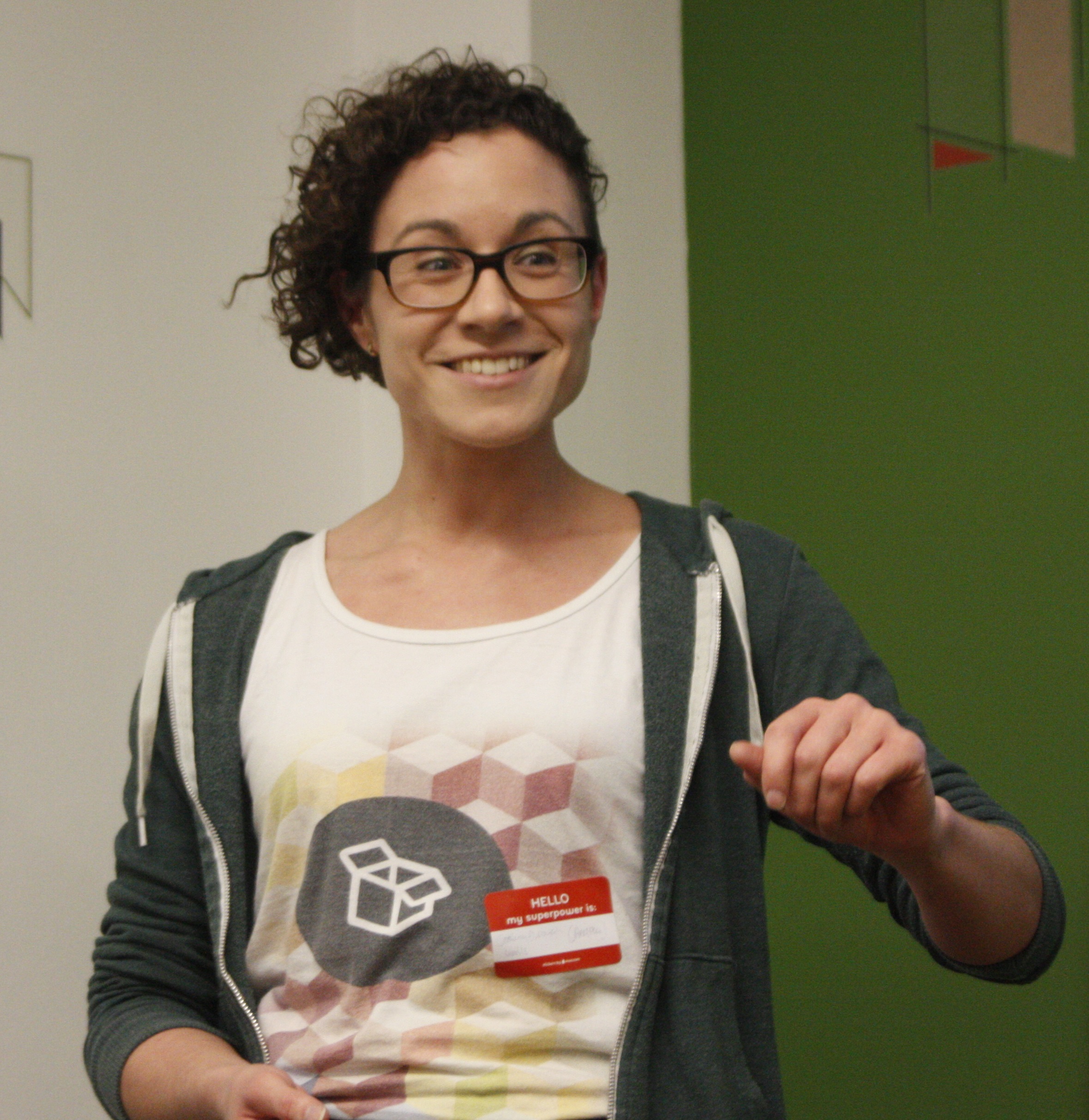
Presenter Andrea Nagel of zeebox

Take a look Laurie’s slides:

All in all, it was a great night with very useful information on all things agile. Thank you again to our sponsor New Bamboo for providing the snacks, venue + talk.

Laurie would love to hear from you directly with any questions, so feel free send a tweet to @wildfalcon

Want to host an event with us? Get in touch: gitlondon@gmail.com

Watch this space for all the upcoming events and make sure to follow us on Facebook and Twitter for updates.